
| Gallery: Nosotros Sufrimos Muchos | |||||||||||
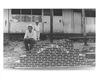
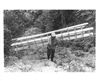
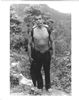
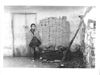
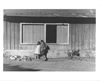
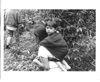
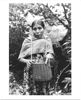
Photographs from coffee growing regions in Mexico I went to villages in the mountains of Oaxaca and Puebla because of the work I'd done documenting farmworkers in Western New York. Virtually all of the workers I met were from Mexico and most of them were from southern Mexico. That means that people have traveled up to 3,000 miles to get here and since the US limits the number of foreigners it lets in, many of the workers are here illegally and have paid as much as $2,500 to be smuggled in. Not all who attempt a border crossing make it. At least 500 Mexicans die each year trying to enter the US. Farm work is among the most difficult work there is. The hours are long and the work is draining. Farmworkers may go for days without work (and, therefore, without pay) and then have to work 12 or more hours a day (without overtime pay) for as long as the farmer says (there is no legally mandated day of rest). In spite of all the hours they work, farmworkers are the most impoverished group of workers in the US. Yet tens of thousands of Mexicans continue to work on farms in western New York. As one farmworker advocate put it, “I can’t imagine the conditions they’ve left to travel that far. . .and do the most difficult labor here.” I decided I wanted to see the conditions they left behind. I’ve done a lot of work documenting homelessness and poverty in the US. I traveled to Mexico three times previously and saw some of the poverty there. Nothing prepared me for what I found in those mountain villages. Just getting to the villages is a bit of an ordeal, requiring a seven-hour bus ride, three hours in the back of a pickup truck (a camioneta) followed by a strenuous three-and-a-half hour trek through the mountains. I was drained carrying a 20-pound pack. People there have it far worse than I did: when it’s time to sell their coffee some of them must walk for over seven hours with 70 pounds of coffee on their backs. That coffee earns them less than 40 cents a pound. Candido, one of my guides, supplements his meager income by selling tangerines in the market. To get to that market, he walks four hours with 25 or 30 pounds of tangerines in his backpack. On a good day, he makes $2. In addition to the exhausting work, there’s the unrelenting heat and humidity, diseases like cholera, dengue fever, malaria and tuberculosis and poisonous snakes. All of the coffee growers I spoke with earn about $500 a year. All of the advocates I spoke with said five to six times that amount is needed to live “without hunger.” My time in the villages showed me why Mexicans will risk so much to enter the US to ". . .do the most difficult work here.” Most of the coffee growers I met grow organic, shade-grown coffee. They're proud they're preserving the land and the animals on it. But for all the good they're doing, they are on the brink of starvation. Fair Trade cooperatives get them better prices for their coffee and other produce. Buying Fair Trade items is one small thing we can do to help. -
Joseph Sorrentino |
| ||||||||||


All images are copyrighted by Joseph Sorrentino and may not be reproduced without his written consent.
Webwork by Lisa Jadwin. Last updated March 16, 2006